

This is a post in a short series on how massage therapists can use the Anatomy by Planes atlas. The previous post explains that traditional dissection anatomy, as good as it is, gives massage therapists only part of what they need to help their clients. This post gets into the practical side of things.
Your client comes back for a third session. Despite both your best efforts, the shoulder pain you worked on resolving remains. You've treated and exercised the rotator cuff, released the pec minor, addressed the glenohumeral joint.
You know something is missing — after all, a healthy body heals, repairs with the right help — but your anatomy doesn't tell you what.
I don’t know about you but I’ve lived this scenario more than once. It’s frustrating and discouraging, especially for your client. But there’s good news. In most instances, it’s not a skill problem. It is, instead, an information problem.
Traditional dissection anatomy identifies structures, their location, and their architecture — often in great detail. What it doesn't show is which structures work together and when. This post is about that gap, and what the Anatomy by Planes atlas does to close it.
What the Atlas Actually Shows
Most anatomy atlases organize the body by region and structure. In line with a dissection-based approach, they show muscles, joints, and skin separately and, typically, in isolation.
Anatomy by Planes is organized differently.
Instead of asking "What does this structure look like and where does it attach?” it asks “Which motions is this structure involved in and with which other structures?”
With the anatomical planes of motion — sagittal, frontal, and transverse — as its foundation (its supporting framework), the atlas groups skin, muscles, and joints in complexes.
A complex is a group of interconnected skin, muscles, and joints that work together to produce clockwise and counterclockwise motion around the axis of a specific plane. The body has nineteen of them, from the big toe to the craniovertebral joint. Consisting of three atlases, each atlas is built around one plane and its complexes.[1]
Complexes are not anatomical regions. They are functional units.
And because they interlock (they share bones, muscles, peripheral nerves, blood vessels, spinal segments, and much more), they work together. Like gears, one complex drives another. Treating and exercising one complex improves all the complexes it connects to.
That's a very different starting point than "which muscle is tight."
The Difference in Practice
Here's a concrete example.
A client comes in with shoulder pain. Reaching overhead and rotating the arm are most painful.[2]
Using a traditional dissection-based atlas, you would look up the muscles of the shoulder and rotator cuff. You would identify their attachments, their functions, and possibly their trigger points. You might treat the infraspinatus, the supraspinatus, the subscapularis. Generally, you would focus on the shoulder.
That is a reasonable place to start. But it's regional and based on a resource that does not take motion into account.
With Anatomy by Planes, you start with the same question you always ask:
"Which motion is most painful?"
Reaching overhead — shoulder flexion and elevation — occurs primarily in the sagittal plane. Rotation occurs in the transverse plane. Each atlas chapter's second page lists which complexes relate to one another “directly.” These “directly related complexes” are most likely involved, and a good place to start when a movement hurts.
For this client, that list extends beyond the shoulder alone. Sagittal shoulder flexion involves the sagittal shoulder complex, yes — but also the sagittal shoulder girdle and the sagittal elbow. These complexes are directly related, while the sagittal rib cage, the sagittal thoracic, and the sagittal wrist are once-removed. Transverse rotation of the arm involves the transverse shoulder, the transverse shoulder girdle, the passive transverse elbow, and the transverse radio-ulnar. More proximally — once-removed — the transverse ribcage and a long list of other complexes, even sagittal ones, are involved.
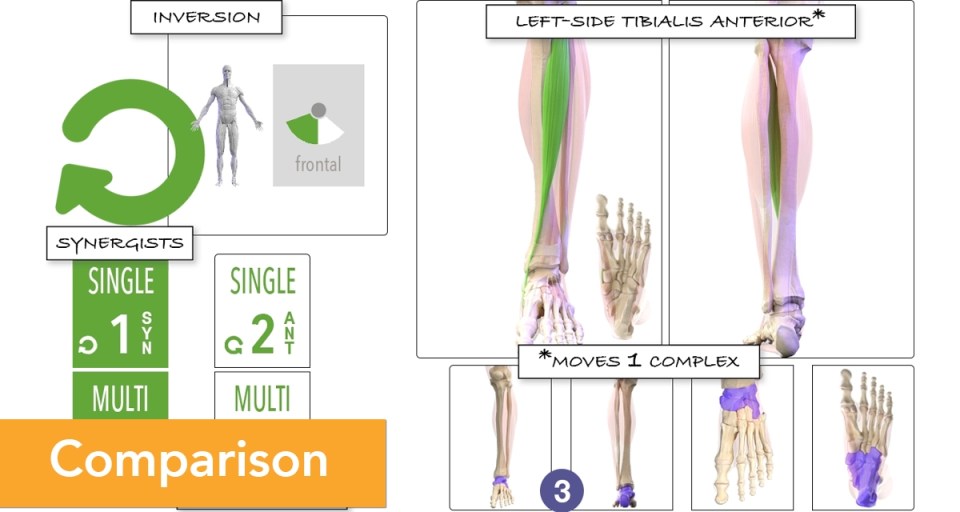
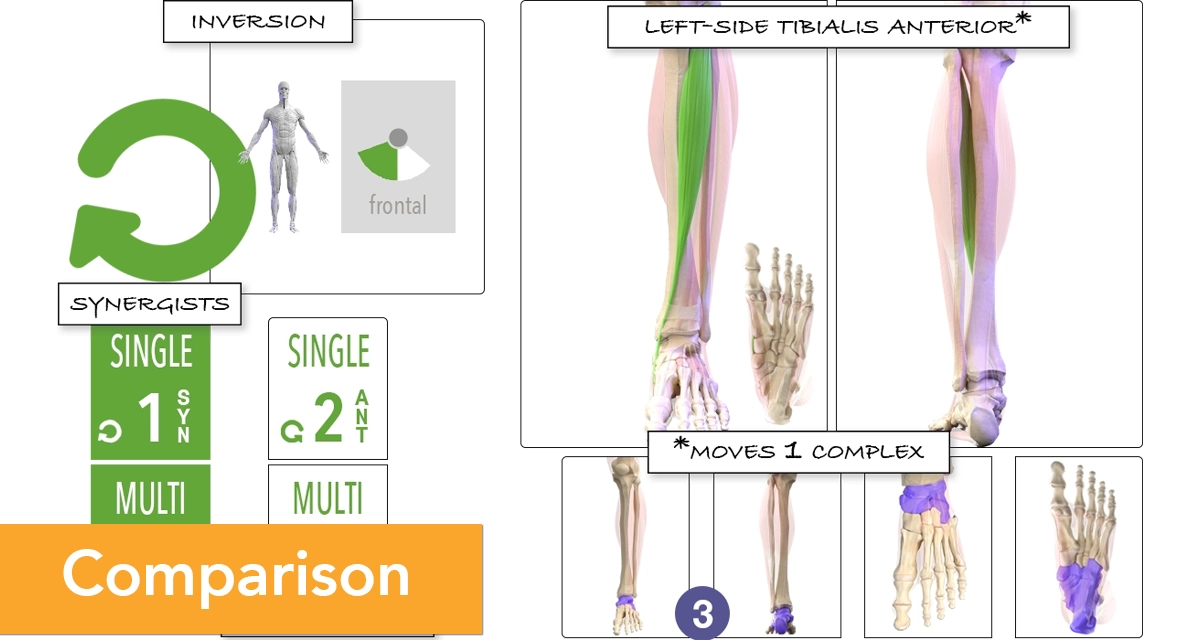
Now you're looking at several interconnected complexes. Within each complex, the atlas shows which skin is involved, which muscles move it directly and indirectly, and which joints participate. For each muscle, it shows whether it is a single-complex or multi-complex muscle — that is, whether it acts on one complex or spans and influences several.
This is not information you can find in a traditional atlas. It's the information that changes how you assess and treat.
Rethinking Assessment
Traditional assessment in massage therapy often follows a structural logic: find the tight tissue, find the tender point, address the restriction.
The atlas supports a different kind of assessment logic: find the painful motion, identify the complexes involved, and evaluate the therapeutic variables — pliability, mobility, and pain in the skin; pliability, mobility, pain, strength, and length in the muscles; alignment, mobility, pain, range of motion, and stability in the joints.
This applies to each complex in the chain, not just the one closest to the pain.
A restricted sagittal shoulder girdle, for example, directly affects sagittal shoulder movement. A stiff transverse rib cage affects rotation through the entire upper body. Addressing one without the other rarely resolves the complaint durably.
Assessment becomes more systematic. It follows the body's movement logic rather than the location of symptoms.
Rethinking Treatment
The same shift applies to treatment.[3] When you know which complexes are involved in a painful motion, you can address skin, muscles, and joints at each complex — not as separate systems, but as one coordinated target. Skin therapy, muscle therapy, joint therapy, and exercises directed at the same complex reinforce one another.
Muscle therapy alone is rarely enough. It addresses one variable of one system.
A multifaceted approach — one that targets all therapeutic variables of the skin, muscles, and joints across the relevant complexes — gets more consistent results. This is not a complicated idea. It is a direct consequence of how motion actually works.
And because complexes interlock, you don't always have to address everything at once. Treating the transverse rib cage complex improves the transverse thoracic, the transverse shoulder girdle, and the transverse shoulder. One well-aimed session can create ripple effects through all connected complexes.

Get your own atlas!
Anatomy by Planes is a soft tissue therapy anatomy atlas designed for massage therapists, bodyworkers, and movement professionals, with clear illustrations that make complex anatomical relationships easier to understand and apply in practice. It supports both study and hands-on clinical work.
What Changes — and What Doesn't
It is worth being clear about something.
Using this atlas does not require learning new techniques. It does not replace your hands-on skills or your clinical experience.
It changes what you're looking at — or rather how you’re looking at the body.
When anatomy is organized around motion, assessments become more systematic. Treatment decisions follow a clearer logic. Results are more reproducible.
Static dissection anatomy builds the foundation. It gives you terminology, structure, and topography — all of which you still need. Anatomy by Planes builds on top of that foundation. It shows which structures work together during movement and helps you use what you already know more effectively.
Should You Get the Atlas?
Honestly, I don't know.
I don't know what complaints you see most often, how you currently approach assessment, or what you want to improve. What I can tell you is why I use it.
When a motion is painful, the atlas tells me which skin, muscles, and joints to evaluate, treat, and exercise. It keeps me from treating in isolation. It keeps me from guessing. And over years of practice, it has helped me get more consistent results with clients whose complaints weren't responding to structure-focused work.
If that sounds familiar, the atlas might be worth a look.
You can explore it here.
Conclusion
Traditional dissection anatomy is great. It gives us precision, terminology, and structural knowledge. But it doesn't show which structures interconnect, which work and move together, or when.
Anatomy by Planes complements that knowledge.
It organizes the body by planes and complexes — the coordinated relationships between skin, muscles, and joints that together drive motion. It starts with a single clinical question: which motion is most painful? And from there, it shows you exactly what to look at, why, and what the connections are.
That shift — from structure to motion, from parts to planes — changes how you assess. It changes how you treat. And over time, it changes what's possible for your clients.
This post is part of a series on motion-based anatomy for soft-tissue therapists. The previous post, Motion-Based Anatomy for Massage Therapists, covers the case for complementing dissection anatomy with a movement-based framework.
References
- Singh, R. E., Iqbal, K., White, G., & Hutchinson, T. E. (2018). A systematic review on muscle synergies: From building blocks of motor behavior to a neurorehabilitation tool. Applied Bionics and Biomechanics, 2018, 3615368. ncbi.nlm.nih.gov
- Barker, P. J., Briggs, C. A., & Bogeski, G. (2004). Tensile transmission across the lumbar fasciae in unembalmed cadavers: Effects of tension to various muscular attachments. Spine (Phila Pa 1976), 29(2), 129–138. journals.lww.com
- Bialosky, J. E., Beneciuk, J. M., Bishop, M. D., Coronado, R. A., Penza, C. W., Simon, C. B., & George, S. Z. (2018). Unraveling the mechanisms of manual therapy: Modeling an approach. Journal of Orthopaedic & Sports Physical Therapy, 48(1), 8–18. jospt.org