

The Limits of Static Dissection Anatomy in Clinical Practice
Massage therapists, like other soft tissue therapists, typically study traditional dissection-based anatomy.
We memorize the names of muscles, their topography, and attachments; the bones, joints, and their structures; as well as the main nerves and vessels. We study the body region by region and system by system.
Dissection-based anatomy is amazing and offers many benefits for massage therapists. It provides precision, establishes terminology, teaches us about anatomical structure and layout, and helps us communicate with other professionals.
Still, for the work we do, it leaves out something essential.
Dissection anatomy is, by nature, static and segmented, while massage therapy is the exact opposite, holistic.
As massage therapists, understanding this limitation is key to improving our clinical thinking and treatment results.
What Static Dissection Anatomy Does Well
Dissection-based anatomy involves identifying structures by separating them. Muscles, joints, skin, deep fasciae, nerves, and vessels are examined one by one.
The body is dissected layer by layer, piece by piece. Each system and its parts are grouped and studied separately.
This approach makes dissection-based anatomy great for:
- Learning the names, structures, and locations of the individual parts
- Building a shared anatomical language
- Establishing basic knowledge
This kind of anatomy helps us understand the body's structure, organization, and makeup. But it doesn’t explain which parts and systems interconnect, work together, and generate motion.
Without a clear understanding of the relationships and collaboration between muscles, joints, and skin, massage therapists often focus on treating and exercising the parts that are easy to recognize.
The Problem for Massage Therapists
Massage therapy isn’t about focusing on individual parts.
We don’t just focus our work on a small area of the body. We don’t affect the integumentary system without also influencing its related systems. We don’t treat a single muscle without thinking about how it connects to everything else. And we don’t treat joints as if they work alone from the rest of the body.
Yet, when we study anatomy in isolation—one muscle and joint at a time—clinical thinking often follows the same pattern.
As massage and soft tissue therapists, it’s easy to fall into the habit of:
- Search for one or several “problem muscles.”
- Focus only on the site of pain.
- Interpret dysfunction as local tightness instead of altered coordination.
- Focusing on structure and forgetting about movement.
This narrow way of thinking isn’t our fault. It’s a natural result of the type of anatomy we learn.
The way we learn and what we learn shape how we think.
When anatomy education focuses more on structure than on how everything works together, therapists often have to figure out the rest on their own after graduation.
The Living Body Is Dynamic
Soft tissue pain and dysfunction rarely result from a single structure acting alone.[1]
Several factors contribute to these complaints:
- A stress vs. stress-resistance imbalance (physical, mental, emotional).”
- Repetitive movement
- Compensation across joints and regions
- Load distribution across tissues[2]
- Neurological adaptation
For example, it may seem odd, but treating a rotator cuff problem by focusing only on the rotator cuff won’t help your client feel better.
A rotator cuff complaint involves how force travels through several complexes, including the hips, lumbar and thoracic, rib cage, shoulder girdle, shoulder, and elbow, as well as how that force is managed across the sagittal, frontal, and transverse planes of motion.
Traditional dissection anatomy helps identify each structure involved, which is valuable. However, it doesn’t clearly show which of these structures connect, work together during movement, or share load across different areas.
For massage therapists, understanding coordination and load transfer is often more clinically useful than knowing isolated attachment sites.

Get your own atlas!
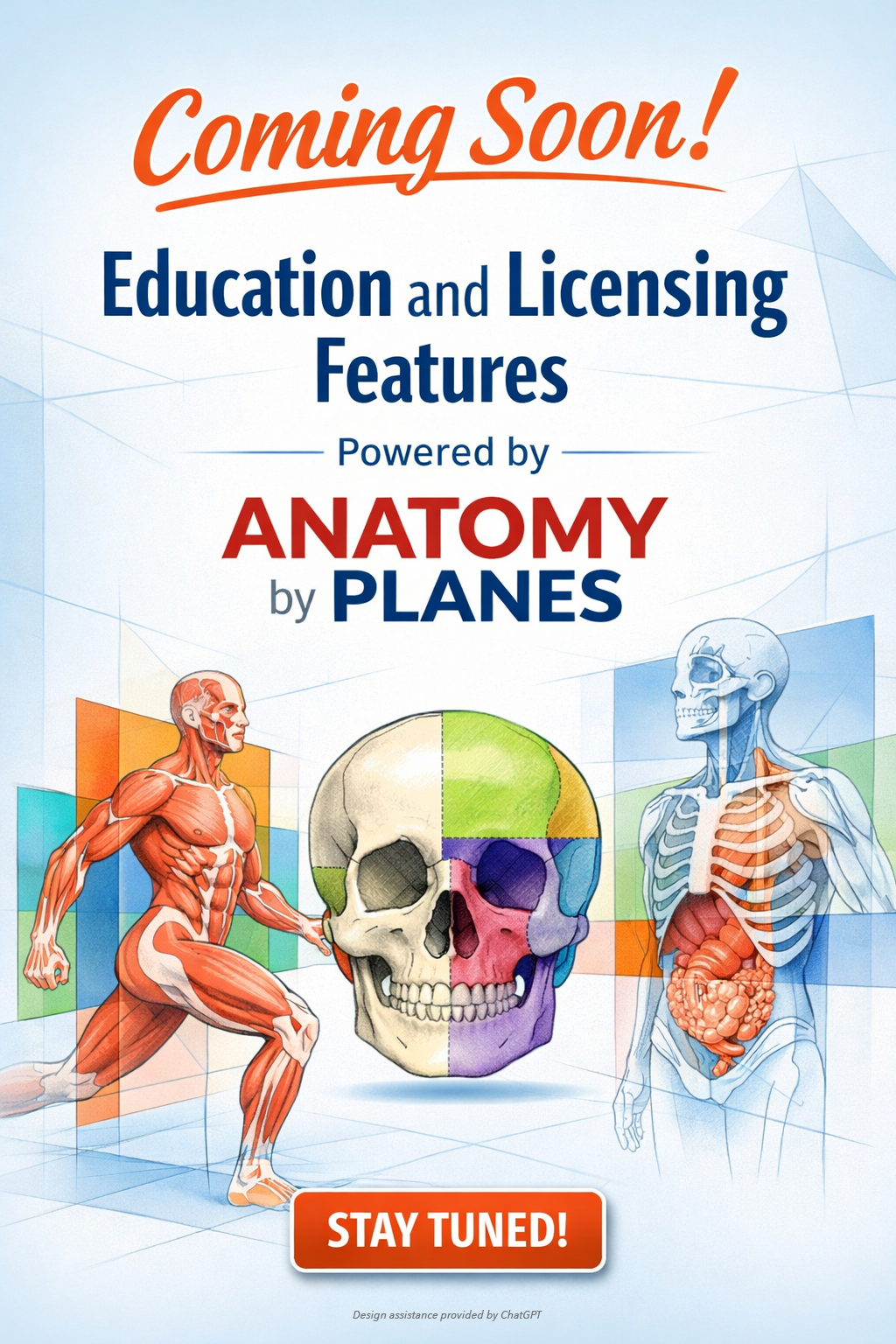
Anatomy by Planes is a soft tissue therapy anatomy atlas designed for massage therapists, bodyworkers, and movement professionals, with clear illustrations that make complex anatomical relationships easier to understand and apply in practice. It supports both study and hands-on clinical work.
From Segmented Anatomy to Integrated Understanding
A better way to teach human anatomy to massage therapists is to complement the often-used traditional dissection method instead replacing it.
Learning the names, structures, and locations of muscles, joints, vessels, and nerves is still very important.
Rather than focusing only on isolated parts and regions, we can organize our traditional anatomical knowledge around:
- Planes of motion
- Regional relationships
- Coordinated movement patterns
- Functional interdependence
- Interconnectedness of systems
This approach encourages a new way of thinking in clinical practice.
Instead of asking:
- “Which muscle is tight?”
We ask questions like:
- “How is movement occurring across this plane?”
- “Where is motion restricted or excessive?”
- “How is the load being distributed?”
- “How are adjacent regions contributing?”
When done right, the focus shifts from individual parts to how these parts work together and connect. That shift changes not only what we treat, but why we treat it.[3]
Why This Matters in Practice
Every part of our body plays a role in movement.
Movement depends on all our organ systems working well together. Even one tight muscle, stiff joint, or immobile nerve can disrupt motion and cause pain.
Because of this, movement can reflect our overall health.
Movement is measurable, observable, and clinically modifiable. As massage therapists, we can assess, treat, train, and improve it. Overall, it’s a key part of what we do.
- We help relieve pain related to the movement apparatus.
- We help clients move better and without pain.
- We use movement to evaluate and diagnose complaints.
- We treat by moving skin, muscles, and joints with our hands and exercises.
If we see human anatomy as fixed and separate parts, our soft-tissue treatments won’t address everything involved.
When we view anatomy as coordinated movement:
- Assessments become more systematic and evidence-based.
- Treatment decisions become more consistent.
- Results become more reliable.
- It becomes easier to understand the body.
Traditional dissection anatomy gives us the structural and topographical knowledge we need, but we also have to understand how skin, muscles, and joints work together during movement.
Without this extra knowledge, our understanding isn’t complete.
Applying a Motion-Based Framework
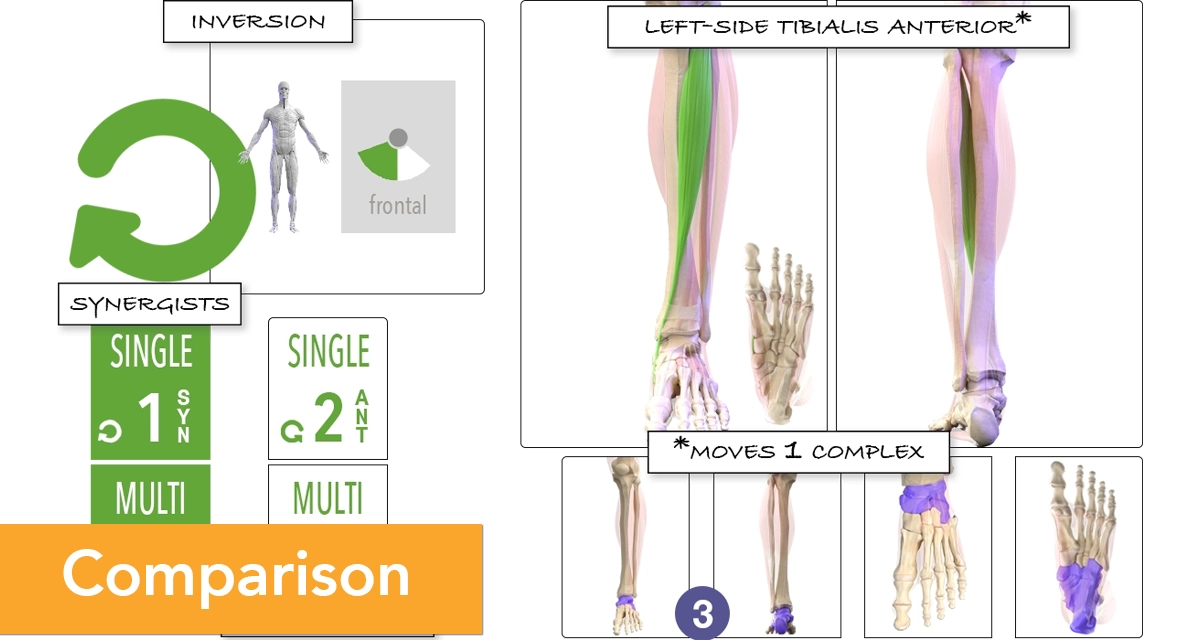
I developed the Anatomy by Planes atlas to offer a more integrated, movement-focused way to understand the body.
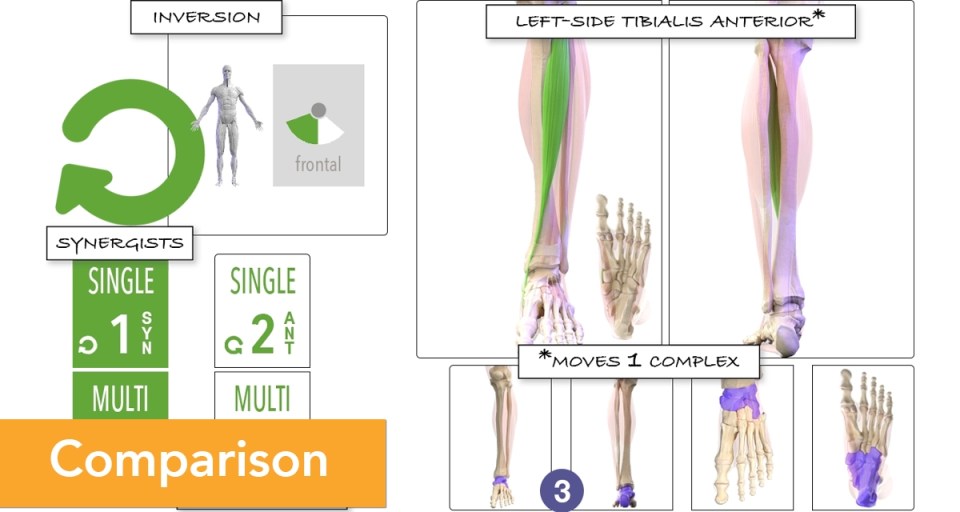
Rather than organizing anatomy only by region or structure, the atlas groups the body according to the anatomical planes of motion and how different parts work together within them. It doesn’t replace traditional anatomy, but shows which skin, muscles, and joints collaborate during movements such as flexion-extension, abduction-adduction, and rotation.
For massage and soft-tissue therapists, this approach can clear up confusion, improve clinical reasoning, and support our shared goal of helping clients feel better.
Conclusion
Traditional dissection anatomy has a clear and necessary value; it establishes terminology, structure, and topography.
But on its own, this type of anatomy can give an incomplete, fragmented, and impractical view of the human body.
Massage therapy requires an anatomical model that also reflects interconnectedness and motion.
When therapists look beyond traditional anatomy to include the planes of motion and how skin, muscles, and joints work together, they can use their knowledge more effectively in treatment.
The aim isn’t to dismiss traditional anatomy but to add to it, making it more useful in everyday clinical work.
- Singh, R. E., Iqbal, K., White, G., & Hutchinson, T. E. (2018). A systematic review on muscle synergies: From building blocks of motor behavior to a neurorehabilitation tool. Applied Bionics and Biomechanics, 2018, 3615368. ncbi.nlm.nih.gov
- Barker, P. J., Briggs, C. A., & Bogeski, G. (2004). Tensile transmission across the lumbar fasciae in unembalmed cadavers: Effects of tension to various muscular attachments. Spine (Phila Pa 1976), 29(2), 129–138. journals.lww.com
- Bialosky, J. E., Beneciuk, J. M., Bishop, M. D., Coronado, R. A., Penza, C. W., Simon, C. B., & George, S. Z. (2018). Unraveling the mechanisms of manual therapy: Modeling an approach. Journal of Orthopaedic & Sports Physical Therapy, 48(1), 8–18. jospt.org