

Ch. 4.6: Complexes and Soft Tissue Therapy

Using the concept of “complexes” - interconnected skin, muscles, and joints that together drive motion - improves the effectiveness and results of soft tissue therapy.

Written by

Willem Kramer

Published on

July 20, 2025

"Complexes" — clusters of skin, muscles, and joints — are incredibly practical for soft tissue therapists like us.

  • They equal motion. Each complex facilitates and regulates motion around the axis of its respective plane, clockwise and counterclockwise.
  • They are holistic. A complex contains interconnected skin, muscles, and joints that share a similar function, location, innervation, circulation, and so on. Moreover, complexes interlock with one another, linking the entire body from head to toe.
  • They simplify our work. Instead of addressing the whole body or focusing solely on individual muscles, joints, and dermatomes, complexes allow us to treat and exercise in manageable, motion-based “clusters” or “groups.”

For instance, a simple hip abduction exercise targets the entire frontal hip complex: the hip abductor muscles, the hip adductor muscles, the hip joint, and its related skin. Mobilizing the frontal hip dermatomes and treating the adductor longus has the same positive, complex-wide effect.

But that’s not all. It gets even better.

Because complexes interconnect like gears, because one complex moves another, treating and exercising one enhances the function of all. For example, treating and exercising the frontal hip improves the frontal pubic symphysis, the frontal sacroiliac, and the frontal knee and ankle (see chapter 4.3).

It’s straightforward and highly effective. I resolve musculoskeletal pain, one complex at a time. 

5 1 vote
Article Rating
Subscribe
Notify of
guest

0 Comments

Author

Willem Kramer is a Netherlands-trained physiotherapist and US-licensed massage therapist with over thirty years of experience working with professional athletes, entertainers, and executives worldwide. He reorganizes anatomy around how the body moves, working from the premise that motion is a whole-body event involving all twelve organ systems within the anatomical planes of motion. He is the author of Anatomy by Planes — a three-atlas set with a foreword by Andrew Luck — and its companion Clinical & Training Guide, and the creator of Motion Anatomy (motionanatomy.com), a free introduction to the framework.

booshop-org-icon_orange-EB801D-hover-637C77

Related posts

Including atlas "Introduction," "Comparison," "Quiz," "Bibliography," and "News" posts.
July 1, 2025

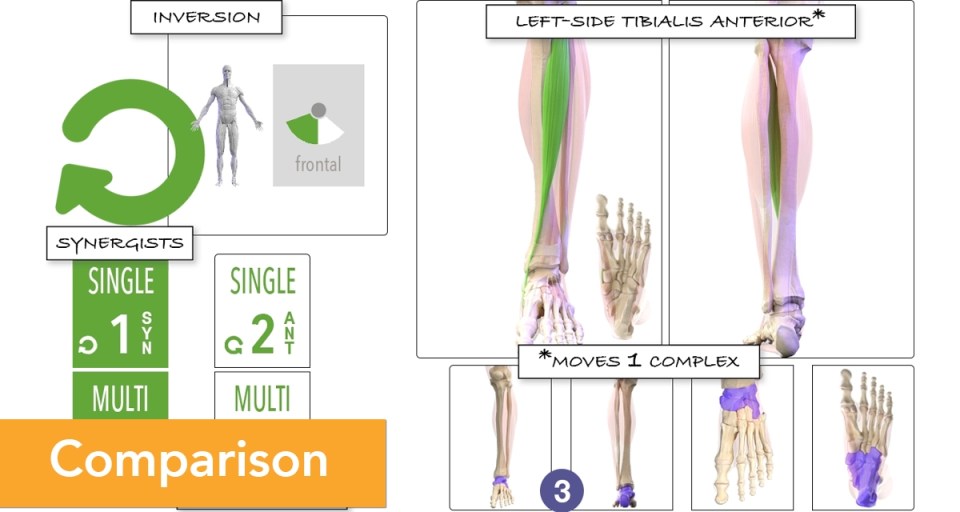
Dissection vs AxP Anatomy: Tibialis Anterior (L)

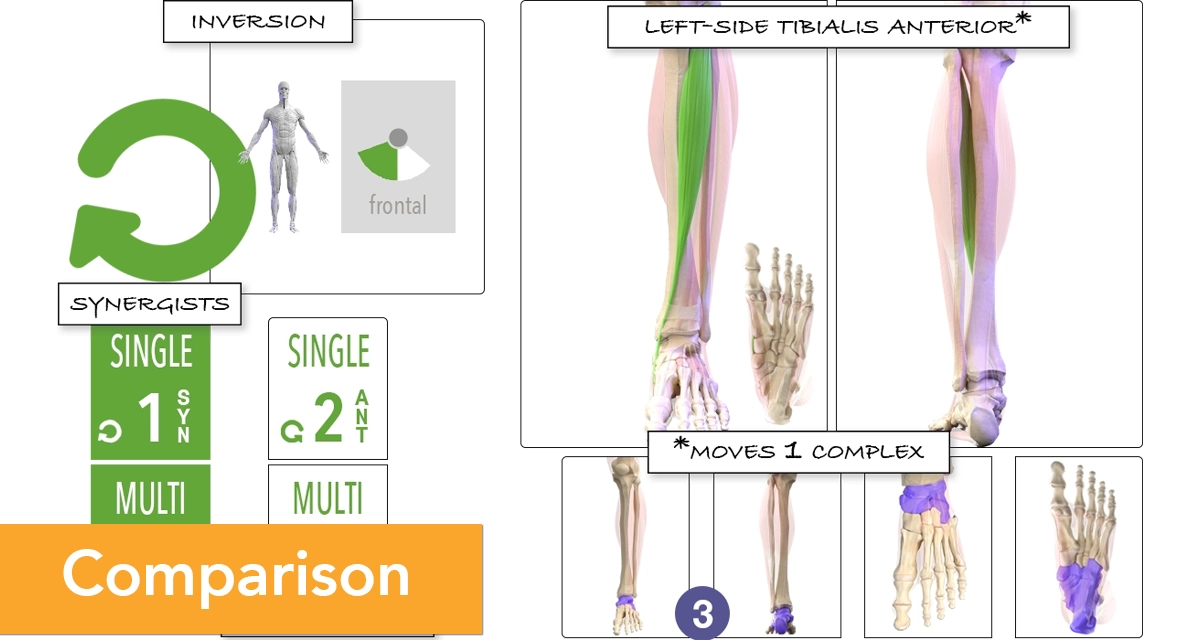
Compare dissection anatomy and soft tissue therapy anatomy: The left-sided tibialis anterior inverts the “frontal ankle,” is a single-complex muscle, has one single-complex synergist, two single-complex antagonists, three multi-complex synergists, and one multi-complex antagonist.
0
Would love your thoughts, please comment.x
()
x
Privacy Overview

This website uses cookies so that we can provide you with the best user experience possible. Cookie information is stored in your browser and performs functions such as recognising you when you return to our website and helping our team to understand which sections of the website you find most interesting and useful. For more information you can read our Privacy Policy.