
Dissection vs AxP Anatomy: Pectoralis Minor (L)

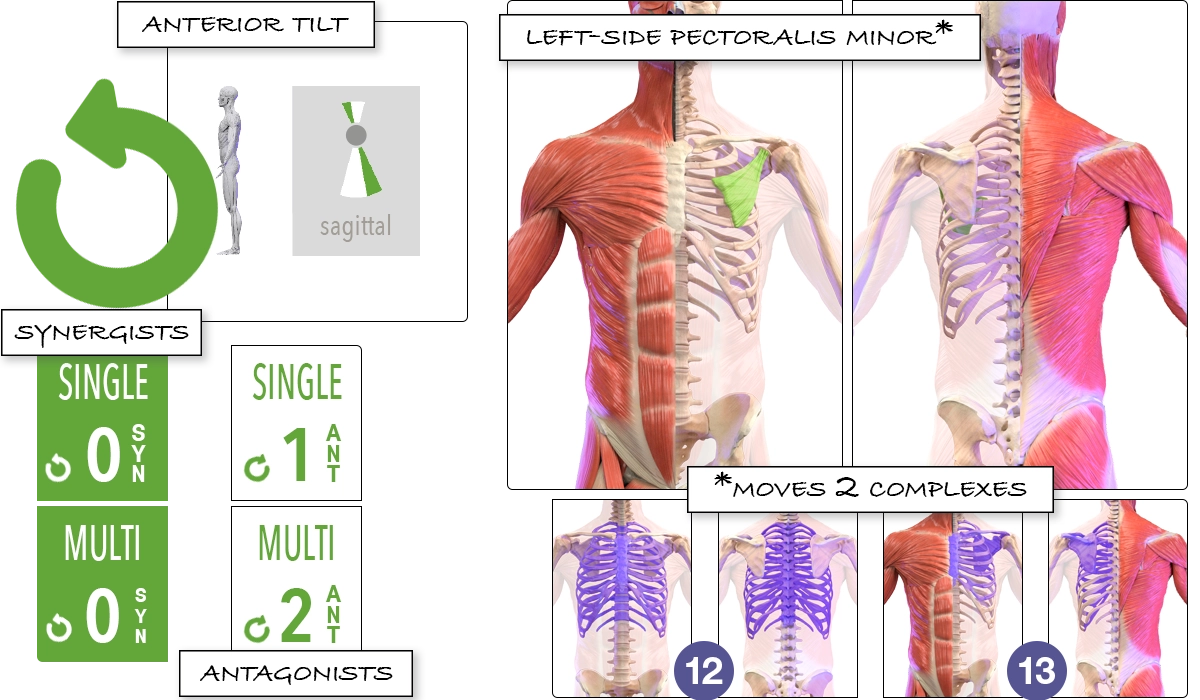
Compare dissection anatomy and soft tissue therapy anatomy: The left-sided pectoralis minor anterior tilts the “sagittal shoulder girdle,” moves two complexes in total, has no single-complex synergists, one single-complex antagonist, no multi-complex synergists, and two multi-complex antagonists.

Written by

Willem Kramer

Published on

June 25, 2025

Anatomy by Planes

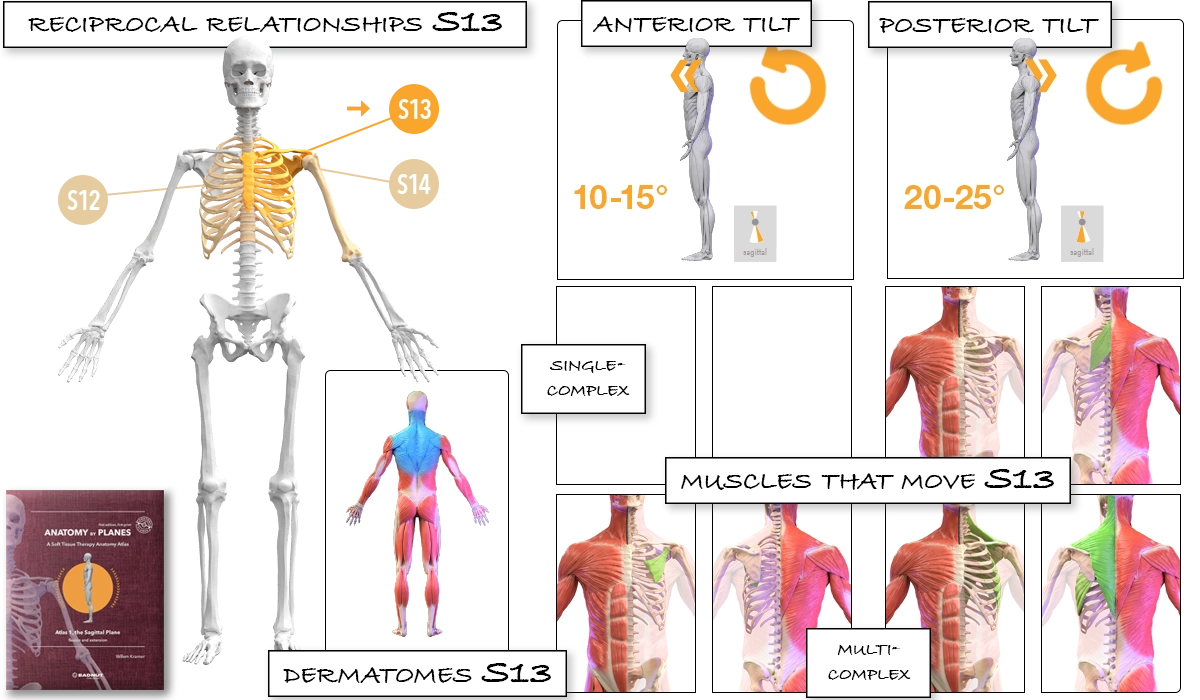
SAGITTAL SHOULDER GIRDLE COMPLEX (S13)

Plane
Sagittal plane.

Complex
Sagittal shoulder girdle, S13.

Joints
Acromioclavicular joint.
Sternoclavicular joint.
Scapulothoracic "joint."

Motions
10 - 15 degrees anterior tilt.
20 - 25 degrees posterior tilt.

Dermatomes
C3 - T9.

Indirect Motion
None.

Reciprocal Relationships
Sagittal rib cage, S12.
Sagittal shoulder girdle, S13.
Sagittal shoulder, S14.

LEFT-SIDE PECTORALIS MINOR

Motion
Anterior tilt.

Muscle
Pectoralis minor.

Multi-Complex (it moves)
Rib cage.
Shoulder girdle.

Depth of Muscle
Level 2 (deep to skin and one layer of muscle).

Single-Complex Synergists (0)
None.

Single-Complex Antagonists (1)
Rhomboids.

Multi-Complex Synergists (0)
None.

Multi-Complex Antagonists (2)
Serratus anterior.
Trapezius (lower part, mostly).

Traditional Anatomy

Proximal attachments
The pectoralis minor connects to the medial surface of the coracoid process of the scapula.

Distal attachment
Distally the muscle connects with the third, fourth, and fifth ribs, close to their costal cartilage, their costochondral joints.

Location
It runs diagnoally from the outside inward, deep to the upper and middle parts of the pectoralis major.

Innervation
Medial pectoral nerve and by nerve fibers from roots C8 and T1.

Vascular Supply
Pectoral and deltoid branches of thoracic-aromial and superior and lateral thoracic arteries.

Motion
Elevation ribs.
Depression shoulder girdle.
Downward rotation shoulder girdle.
Protraction shoulder girdle.


5 3 votes
Article Rating
Subscribe
Notify of
guest

0 Comments
Inline Feedbacks
View all comments

Author

Willem is a Netherlands-educated physiotherapist and a US-licensed massage therapist with over thirty years of experience working with professional athletes, entertainers, and executives. He presents a movement-based approach that extends dissection anatomy for the specific needs of soft-tissue therapists. Willem advocates for a holistic understanding of the body, emphasizing that all organ systems are interconnected and interdependent. His insights offer both practitioners and enthusiasts a fresh perspective on musculoskeletal health.

booshop-org-icon_orange-EB801D-hover-637C77

Related posts

Including atlas "Introduction," "Comparison," "Quiz," "Bibliography," and "News" posts.
June 28, 2025

Dissection vs AxP Anatomy: Rotatores Thoracis (L)

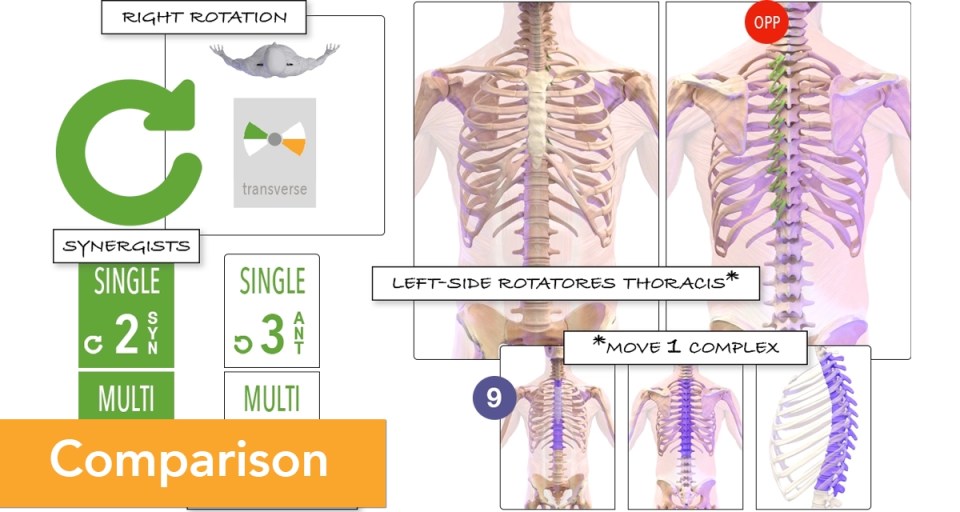
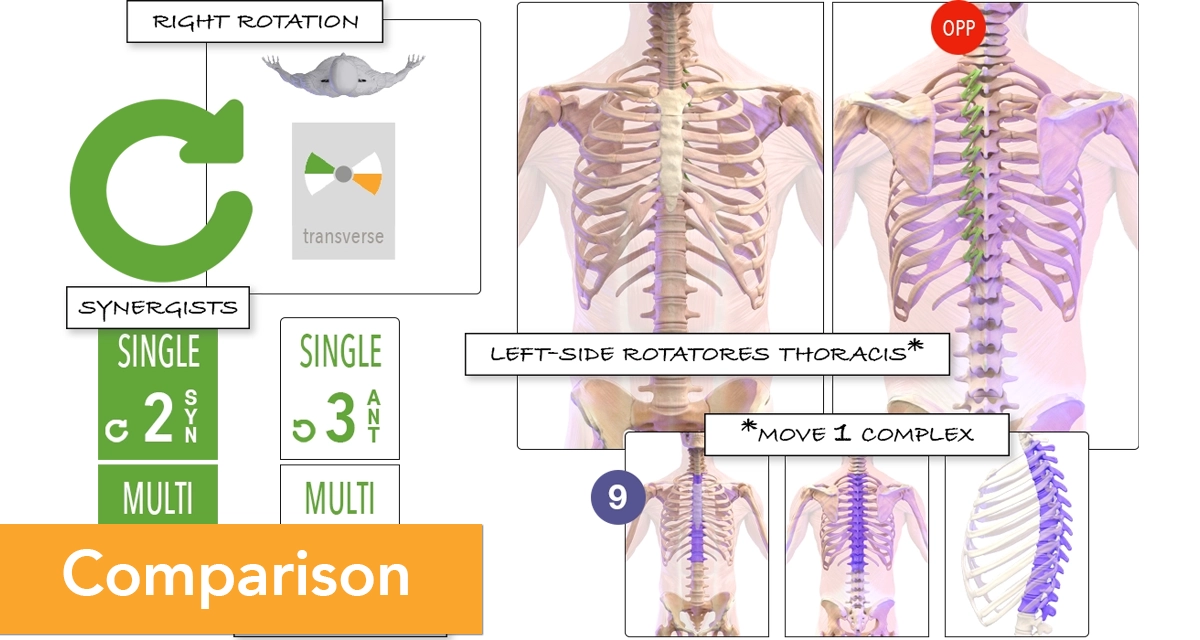
Compare dissection anatomy and soft tissue therapy anatomy: The left-sided rotatores thoracis right rotate the “transverse thoracic,” are single-complex muscles, have two single-complex synergists, three single-complex antagonists, and six multi-complex synergists and antagonists.
0
Would love your thoughts, please comment.x
()
x
Privacy Overview

This website uses cookies so that we can provide you with the best user experience possible. Cookie information is stored in your browser and performs functions such as recognising you when you return to our website and helping our team to understand which sections of the website you find most interesting and useful. For more information you can read our Privacy Policy.