


"Static, dissection-based anatomy is not designed for what we do. This atlas is."
AN ANATOMY ATLAS FOR SOFT-TISSUE THERAPISTS
Anatomy by Planes

Human Anatomy & the Anatomical Planes of Motion combined.
Anatomy by Planes shows how anatomy relates to movement. Understanding this connection is crucial to resolving musculoskeletal pain.
ANATOMY BY PLANES
About the
Atlas
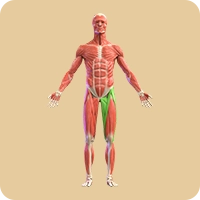
Visual
Over 65% of humans are visual learners. Maybe that's because the brain understands visuals 60,000 times faster than text. This atlas contains many illustrations and very little text.
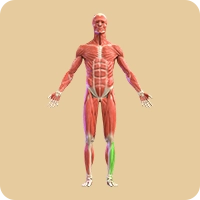
Reference Guide
Anatomy by Planes is a comprehensive, visual, soft tissue therapy reference guide. It's one of a kind.
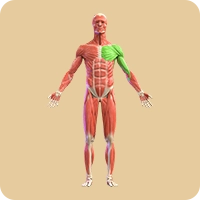
Easy to Understand
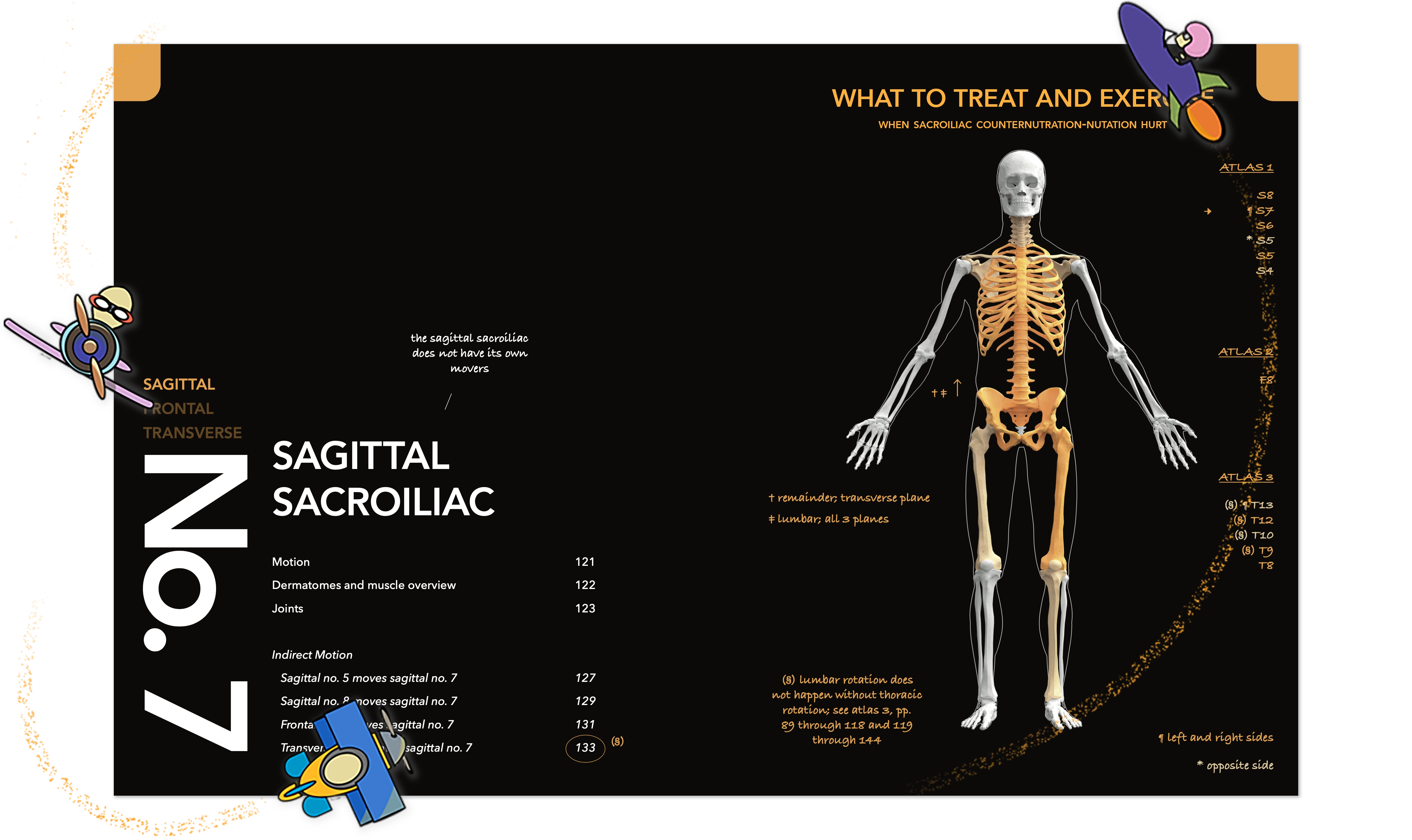
Anatomy by Planes shows you which skin, muscles, and joints to treat and exercise when motion hurts.
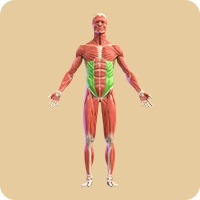
Holistic
Learn about the reciprocal relationships and interconnectedness of skin, muscles, joints, and motion.
Chasing the location of pain, over-reliance on protocols, recurrence of musculoskeletal discomfort, and inconsistent treatment results; the issue isn’t our skill, it’s the “type of anatomy” we're working with.
ANATOMY BY PLANES
A Comprehensive, Visual , Soft Tissue Therapy Reference Guide
Three hardcover atlases, one for each plane of motion; the sagittal plane, the frontal plane, and the transverse plane.
Nineteen interlocking complexes that make it easy to help your clients holistically and effectively. It's a new and better way forward.
Fourty-six chapters cover head-to-toe skin, muscles, and joints and the motions they're involved in.
Three hundred and forty-five muscles: the skin they connect with, the joints they cross, and the motions they generate.
"Anatomy by Planes," with a foreword by Andrew Luck, former NFL quarterback
Atlas Description
Traditional anatomy organizes the body by structure. "Anatomy by Planes" reorganizes it by motion.
Over thirty years of treating musculoskeletal pain — across MLB, NBA, and NFL rosters, Olympic athletes, and clinical practice — Willem Kramer arrived at a consistent problem: traditional dissection anatomy doesn't show how skin, muscles, and joints relate to movement or to each other. It wasn't designed to. Its goal is structural description, not clinical application.
This three-atlas set fills that gap. Organized by the three anatomical planes of motion — sagittal, frontal, and transverse — it maps 345 muscles alongside the skin they connect with, the joints they cross, and the motions they generate. Nineteen interlocking complexes show how these structures relate across the whole body, not in isolation.
The result is a visual reference built around the questions soft-tissue therapists actually ask in practice: which skin, muscles, and joints are involved in this motion? How do they influence each other? What connects the hip to the knee, and the knee to the ankle?
"Anatomy by Planes" does not replace your gross anatomy training. It builds on it — and takes it somewhere traditional anatomy was never meant to go.
Movement does not happen muscle-by-muscle but rather within the anatomical planes of motion, where the integumentary, muscular, skeletal, and other systems collaborate as one integrated whole. With a static, dissection-based view, we tend to see individual parts rather than the whole body.


AN ANATOMY ATLAS FOR SOFT-TISSUE THERAPISTS
Video Introduction
A movement-based understanding of the body’s anatomy helps us see beyond a dissection-based one. It lets us leverage the reciprocal relationships between skin, muscles, joints, and motion, bringing us closer to our ultimate goal: helping our clients as best we can.


WHAT COLLEAGUES SAY
Testimonials

This atlas simplifies a challenging subject, making it easy to understand and use.

In any sport, the body's reciprocal relationships are essential. Overhead athletes, for example, rely on the legs, torso, and arms working together smoothly.

"Anatomy by Planes" introduces the interconnectedness of skin, muscles, joints, and movement.
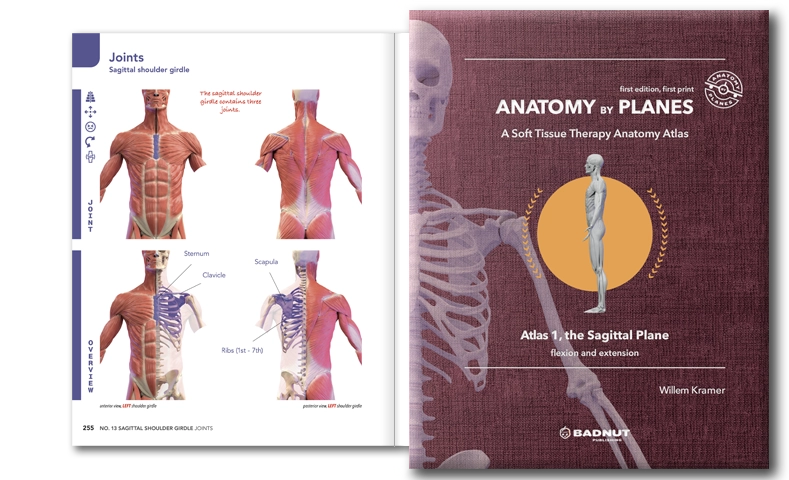
Atlas 1
Sample chapter,
Sagittal Shoulder Girdle.
Colors and image quality are
altered to reduce PDF file size.
Atlas 2
Sample chapter,
Frontal Ankle.
Colors and image quality are
altered to reduce PDF file size.


Atlas 3
Sample chapter,
Transverse Thoracic.
Colors and image quality are
altered to reduce PDF file size.